Genuine Bearing Wholesale Supplier for MRO Maintenance Programs
The cheapest bearing on the invoice is often the most expensive component in your plant.
Effective distributor programs for maintenance products must guarantee multi-brand authenticity, flexible MOQ, and full traceability to prevent catastrophic equipment failures. Regional MRO distributors seeking reliable multi-brand bearing sourcing require more than just low unit prices; they need verifiable origin documentation and the ability to consolidate mixed-brand containers to serve local factories efficiently. Without these pillars, procurement teams risk introducing counterfeit components that compromise entire production lines.
I still remember the silence in the control room of a cement plant in the Lekki Free Trade Zone. It was not the peaceful quiet of a well-oiled machine, but the heavy, suffocating silence of a stopped rotary kiln. The culprit was a batch of spherical roller bearings that looked identical to the genuine article but had been sourced through a channel that prioritized price over provenance. Within months, the cage fractured, leading to the destruction of the main reducer. The downtime lasted weeks, costing far more than the savings from the initial purchase. That experience shifted my focus from general sales to the rigorous verification of supply chains. It highlighted why effective distributor programs for maintenance products are not just about logistics, but about risk mitigation.
What defines a reliable maintenance product distributor program?
A reliable program is defined by strict authenticity verification and the capability to consolidate multiple brands into a single, compliant shipment.
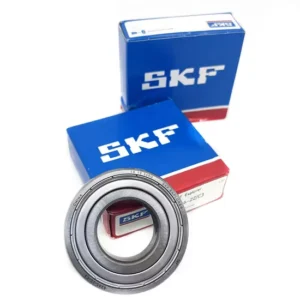
Many buyers assume that authorized regional channels are the only safe route, yet these channels often lack the agility for emergency spot availability or mixed-SKU consolidation. A robust distributor program bridges this gap by offering genuine multi-brand bearing sourcing with complete transparency. This means every item, whether it is an SKF deep-groove ball bearing or an FAG cylindrical roller bearing, comes with documentation that traces its journey from the manufacturer’s production facilities to your warehouse.
The core of this reliability lies in the ability to verify authenticity before bulk purchasing. Counterfeiters have become sophisticated, replicating packaging and even laser markings. However, they rarely replicate the metallurgical consistency required for heavy-load applications. [NEED_CITE: ISO standards for bearing steel cleanliness and fatigue life] Professional distributors employ cross-brand equivalent model lookup methods and batch-to-batch dimensional tolerance verification to ensure that what arrives matches the technical specifications required for high-stress environments.
For regional wholesalers, this translates to a partner who does not just move boxes but validates integrity. When sourcing for local resale, the ability to mix SKUs from premium global brands like NSK, NTN, and TIMKEN with reliable domestic lines allows for a balanced inventory strategy. This approach supports both high-margin specialty sales and high-volume standard replacements, ensuring that the distributor program aligns with the diverse needs of the local industrial base.
How do flexible MOQs support local MRO resale?
Flexible minimum order quantities bridge the critical gap between single-unit emergency spares and full-container project orders.
Traditional official channels often impose high volume requirements that do not align with the fragmented demand of local repair workshops and small-scale factories. A distributor program that accommodates flexible MOQs enables regional suppliers to maintain a comprehensive stock without tying up excessive capital in slow-moving inventory. This flexibility is essential for serving the MRO sector, where demand can swing from a single urgent replacement to a planned overhaul requiring hundreds of units.
Consider the logistics of a mixed-batch container consolidation. Sourcing diverse SKUs for local resale requires a partner who can efficiently combine single units of rare angular contact ball bearings with pallets of common deep-groove types. This capability reduces shipping costs per unit and ensures that local distributors can offer competitive pricing while maintaining healthy margins. [NEED_CITE: Logistics efficiency metrics for consolidated LCL vs FCL shipments]
The impact on local market responsiveness is significant. When a textile mill in Southeast Asia needs a specific insert bearing for an aging loom, they cannot wait for a factory-direct order cycle. A distributor with massive spot inventory and flexible MOQs can fulfill this request immediately, preventing production halts. This agility builds trust with end-users, who come to rely on the local distributor as a solution provider rather than just a parts vendor. The ability to scale from single-unit emergencies to full container loads ensures that the supply chain remains resilient against fluctuating market demands.
Why is full traceability critical for heavy-industry MRO?
Full traceability prevents catastrophic failures by providing verifiable origin documents that confirm the material integrity of each component.
In heavy industries such as mining, steel production, and wind power, the cost of failure extends far beyond the price of the replaced part. A failed bearing in a wind turbine gearbox or a mining crusher can lead to extended downtime, safety hazards, and significant repair expenses. Traceability ensures that every bearing can be linked back to its original manufacturing batch, providing assurance that it meets the required ISO quality assurance standards.
The absence of traceability documentation often leads to customs clearance delays and port hold-ups, disrupting the supply chain before the parts even reach the facility. [NEED_CITE: International customs regulations for industrial machinery components] Complete origin certificates and quality reports are not just bureaucratic formalities; they are essential tools for risk management. They allow maintenance engineers to perform failure analysis root-cause tracking with confidence, knowing that the component itself was not the variable.
For MRO wholesalers, offering full traceability is a competitive advantage. It distinguishes genuine supply from the gray market, where documentation is often forged or missing. By demanding complete traceability documentation, buyers protect their reputation and their clients’ operations. This level of transparency is particularly crucial when sourcing for critical applications where equipment reliability is non-negotiable. It transforms the procurement process from a transactional exchange into a strategic partnership focused on long-term operational stability.
How to verify bearing authenticity before bulk purchasing?
Verification requires demanding complete traceability documentation and conducting ISO-compliant quality checks on random samples from each batch.
Visual inspection alone is insufficient for detecting high-quality counterfeits. Buyers must implement a multi-layered verification process that includes checking holographic seals, verifying batch numbers against manufacturer databases, and examining the physical characteristics of the bearing. [NEED_CITE: Global bearing industry association guidelines on anti-counterfeiting measures] Key indicators include the precision of the laser marking, the quality of the packaging materials, and the consistency of the grease fill.
A practical approach involves requesting sample units for dimensional tolerance verification before committing to a large order. This step ensures that the bearings meet the specified P0 or P6 precision classes and that the internal clearances are within acceptable limits. For critical applications, third-party laboratory testing can provide additional assurance regarding material composition and hardness.
Engaging with a supplier who offers technical selection support and cross-brand equivalent model consultation further enhances the verification process. These experts can identify potential compatibility issues and recommend suitable alternatives if the original brand is unavailable. This collaborative approach reduces the risk of ordering incorrect specifications and ensures that the selected bearings will perform reliably in their intended application. By integrating these verification steps into the procurement workflow, buyers can significantly reduce the likelihood of introducing counterfeit components into their maintenance inventory.
Conclusion
Authenticity, flexibility, and traceability are the non-negotiable pillars of a successful MRO supply strategy.
Effective distributor programs for maintenance products protect industrial operations from the hidden costs of counterfeit components and supply chain disruptions. By prioritizing partners who offer verified multi-brand sourcing and adaptable logistics, regional distributors can build resilient inventories that meet the diverse needs of their local markets. This approach ensures that every bearing installed contributes to sustained productivity rather than unexpected downtime.
Have a shutdown list?
Send the whole list in one message. Spare Parts Company quotes each SKF bearing and its accessories line by line, with availability and estimated lead time.