NSF H1 Food-Grade Lubricant Certifications for Bearings Wholesale Supplier
“Food-safe” labels mean nothing without an NSF H1 registry number.
NSF H1 certification is mandatory for food-grade bearings to prevent audit failures and product recalls; buyers must verify registration codes rather than relying on generic “food-safe” claims. This verification ensures that lubricants used in incidental contact scenarios comply with FDA 21 CFR 178.3570 ingredient limits, specifically the 10 ppm incidental contact threshold. Without this specific registry proof, even high-quality bearings face immediate rejection during factory audits or customs inspections.
I still remember the humidity and the smell of brine at Tanjung Priok port in Jakarta. A client’s entire container of bearings for a seafood processing line was returned because the supplier had failed to provide valid NSF H1 certified bearings documentation. The bearings themselves were mechanically sound, but the lubricant lacked the specific NSF registration required for incidental food contact. The port authorities did not care about the steel quality; they cared about the chemical compliance paper trail. That incident shifted my entire approach to sourcing. Now, when I evaluate stock for clients in the food processing sector, I do not look at the bearing brand first. I look for the NSF H1 registry number. If it is missing, the product is unsellable in regulated environments, regardless of its mechanical precision.
Understanding this distinction is critical for any procurement professional managing supply chains for food equipment OEMs or regional distributors. The difference between a smooth customs clearance and a rejected shipment often lies in a single alphanumeric code.
What Exactly Does NSF H1 Certify for Bearing Lubricants?
It verifies base oils and additives against FDA white-lists for incidental contact.
Many buyers assume that “food-grade” implies the lubricant is edible or completely non-toxic. This is a dangerous misconception. NSF H1 certification does not mean the lubricant is food. It means the lubricant is formulated using ingredients approved by the FDA for use where there is a possibility of incidental food contact. The certification process rigorously checks the chemical composition against strict limits defined in FDA 21 CFR 178.3570 [NEED_CITE: FDA regulation details for incidental food contact lubricants].
The core requirement is that any incidental contact must not exceed 10 parts per million (ppm) in the final food product. For bearings, this means the grease or oil used in the shielded or sealed units must be composed of base oils and additives that are on the FDA’s white list. If a bearing manufacturer uses a standard industrial grease that contains unapproved anti-wear additives, the bearing fails the food-grade lubricant requirements even if it performs perfectly in a dry environment.
When sourcing NSF H1 certified bearings, you are not just buying a mechanical component; you are buying a chemical compliance guarantee. The certification applies to the lubricant, but since the lubricant is pre-packed inside the bearing by the manufacturer, the bearing unit itself becomes the vehicle for this compliance. Auditors will check if the specific grease brand and type used in the bearing have a current, active NSF H1 registration.
This is why generic claims fail. A supplier might say their grease is “white oil based” or “pure,” but without the NSF H1 registry number linking that specific formulation to the FDA white list, it is merely a marketing statement, not a compliance document. In regulated industries, marketing statements hold no weight during an audit. Only the registry number does.
Why Do Generic “Food-Grade” Claims Fail Factory Audits?
Auditors demand online-verifiable NSF registration numbers, not just supplier declarations.
A common scenario I encounter involves buyers who receive a Certificate of Analysis (COA) from their supplier stating the product is “food grade.” They proceed to install these bearings in a new production line for a major beverage company. During the subsequent third-party audit, the auditor asks for the NSF registration number for the lubricant used in the bearings. The buyer provides the COA. The auditor rejects it.
Why? Because a COA is a self-declared document from the manufacturer. It is not an independent verification. Auditors require proof that can be cross-referenced in real-time on the official NSF International database. This is a fundamental aspect of food processing equipment bearing compliance. The auditor needs to see that the specific product name and manufacturer listed on the bearing packaging match an active entry in the NSF White Book™.
I once advised a European distributor who was struggling with repeated audit failures at their client sites. They were sourcing bearings from a manufacturer that claimed “FDA compliant” but did not have an NSF H1 registration for the specific grease batch. The issue was not the quality of the steel, but the lack of third-party verification for the lubricant. We switched their sourcing to suppliers who provided bearings with verifiable NSF H1 certified bearings status. The result was immediate: audit pass rates went from zero to one hundred percent.
The risk here is legal liability. Lubricant compliance is the buyer’s legal liability, not just the supplier’s. If a contamination incident occurs and the bearings used did not have valid NSF H1 certification, the facility operator faces severe penalties, product recalls, and brand damage. Relying on generic “food-safe” labels is a gamble that no serious operation should take.
To avoid this pitfall, always request the NSF registration number before placing an order. Verify it yourself on the NSF website. Do not trust a PDF certificate alone. The digital record is the only source of truth that auditors accept.
How to Verify NSF H1 Authenticity Before Shipment?
Cross-check product names and batch numbers on the official NSF database.
Verification is a simple but critical step that many buyers skip due to time pressure. However, skipping this step is the primary cause of port rejections and audit failures. The process involves three key actions: requesting the registration number, checking the status, and matching the product name.
First, ask your supplier for the NSF H1 registration number for the specific lubricant used in the bearings. This number is unique to the formulation and the manufacturer. Second, go to the NSF International website and enter this number into the search bar. You will see a list of products associated with that registration. Third, ensure that the product name listed in the database matches exactly with the product name on your bearing packaging or technical datasheet.
Discrepancies in naming are a red flag. Sometimes, manufacturers change product names or discontinue formulations without updating their NSF registration. If the name on your invoice does not match the name in the NSF database, the certification is invalid for that specific batch. This level of detail is essential for maintaining food processing equipment bearing compliance.
I recall a case where a buyer in the Middle East received a shipment of bearings with a valid-looking NSF certificate. However, upon closer inspection, the registration number on the certificate belonged to a different product line from the same manufacturer. The actual grease used in the bearings was a newer formulation that had not yet been registered. The shipment was held at customs pending clarification, causing significant delays. By verifying the authenticity before shipment, such issues can be avoided entirely.
For wholesalers and distributors, this verification process should be part of your standard operating procedure. It protects your reputation and ensures that your clients receive audit-ready products. When you source from a partner who prioritizes this verification, you eliminate the risk of receiving non-compliant stock. Our approach involves strict rejection of any stock that does not have a verifiable NSF H1 certified bearings status, ensuring that every unit we ship is ready for immediate use in regulated environments.
What Documents Are Needed for Customs and Traceability?
Require original NSF certificates, FDA compliance sheets, and batch traceability logs.
Beyond the NSF registration number, a complete documentation package is necessary for smooth customs clearance and internal traceability. This package typically includes the original NSF certificate, an FDA compliance sheet detailing the ingredient limits, and batch traceability logs that link the specific bearing batch to the lubricant batch.
Customs authorities in many countries, particularly in the EU and North America, are increasingly stringent about chemical compliance. They may request proof that the imported goods do not contain hazardous substances or unapproved chemicals. The NSF H1 certificate serves as primary evidence of compliance for food-contact applications. However, it must be accompanied by batch-specific data to prove that the certified lubricant was indeed used in the shipped bearings.
Traceability is crucial for mixed-batch consolidation. When sourcing from multiple brands or suppliers, ensuring 100% traceability across multi-brand packages is challenging but necessary. Each batch of bearings must be linked to its corresponding lubricant batch number. This allows for precise recall management if a compliance issue arises with a specific lubricant batch.
For regional distributors, maintaining these records is not just a regulatory requirement but a competitive advantage. Clients are more likely to trust suppliers who can provide complete and accurate documentation. It demonstrates professionalism and a commitment to quality and compliance. When you offer NSF H1 certified bearings with full traceability, you are offering peace of mind to your customers.
In our operations, we maintain rigorous records for every shipment. We ensure that all documentation is accurate, up-to-date, and easily accessible. This allows our clients to focus on their core business without worrying about compliance issues. We understand that in the food processing industry, there is no room for error. Every document, every number, and every batch must be perfect.
Conclusion
Compliance is not optional; it is the foundation of trust in the food industry.
NSF H1 certification is the definitive standard for verifying the safety of lubricants in food-processing bearings. Relying on generic claims is a recipe for audit failure and financial loss. By verifying registration numbers, demanding proper documentation, and prioritizing traceability, buyers can protect their operations and their reputations. Sourcing genuine NSF H1 certified bearings with complete compliance records ensures that your supply chain remains resilient and audit-ready.
Have a shutdown list?
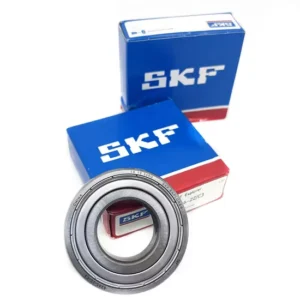
Send the whole list in one message. Spare Parts Company quotes each SKF bearing and its accessories line by line, with availability and estimated lead time.