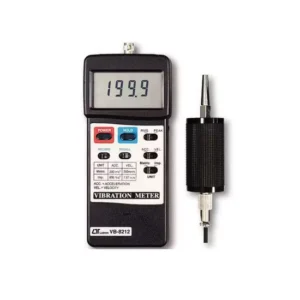
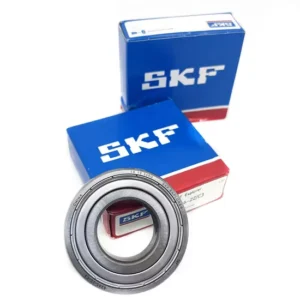
Vibration Monitoring Program: Bulk Bearing Supplier for Sale
Vibration alarms rarely mean the bearing is bad; they usually mean the installation was wrong.
Starting a successful vibration monitoring program requires establishing ISO-compliant baselines, selecting bearings with correct clearance classes for thermal expansion, and using proper heating tools for installation to prevent mechanical damage. Without these foundational steps, sensors will only record the symptoms of poor maintenance rather than predicting genuine component fatigue.
I remember standing in a sweltering ceramic plant in Foshan, watching a maintenance team dismantle a high-temperature press machine. The main shaft had triggered a critical vibration alarm, and the team was convinced the new deep-groove ball bearings were defective. When we pulled the unit apart, the cage was shattered. But the inner ring told the real story: hard hammer marks and evidence of severe brinelling. The bearing hadn’t failed due to quality; it had failed because the installer had driven it onto the shaft with a steel hammer, destroying the internal geometry before it even spun. Furthermore, they had installed a standard C0 clearance bearing in a zone where thermal expansion required at least C3. The heat expanded the inner ring, locked the rolling elements, and caused catastrophic cage failure within days. This scene repeated itself across countle*ion monitoring program is not just about buying sensors; it is about ensuring the physical integrity of the rotating assembly. [NEED_CITE: common causes of premature bearing failure per ISO 15243]
Most teams rush to buy analytics software, but if the baseline data is corrupted by poor installation or wrong part selection, the algorithm has nothing valid to learn from.
Why Do Most Vibration Monitoring Programs Fail?
Ignoring installation details and clearance selection triggers false alarms and premature failures.
The most common reason vibration monitoring initiatives stall is not sensor inaccuracy, but human error in the mechanical setup. When a maintenance manager sees a spike in velocity or acceleration, the instinct is to replace the bearing. However, if the root cause is incorrect fitment or inappropriate clearance, the new bearing will fail in the same way, creating a cycle of waste and distrust in the monitoring system.
In many industrial settings, technicians still use impact methods for mounting bearings. This practice introduces microscopic dents on the raceways, which show up as high-frequency vibration signatures almost immediately. These signals mimic early-stage spalling, leading to unnecessary replacements. Additionally, failing to account for thermal expansion in high-load applications like steel mills or cement crushers leads to internal preload. As the machine heats up, the inner ring expands more than the outer ring, reducing the internal clearance until the rolling elements are crushed.
| Failure Mode | Root Cause | Vibration Signature Impact |
|---|---|---|
| Brinelling | Hard hammering during install | High-frequency noise, mimics early spalling |
| Cage Fracture | Incorrect clearance class (e.g., C0 in high temp) | Sudden increase in overall velocity, erratic spikes |
| False Alarm | Loose sensor mounting or poor baseline | Inconsistent readings, non-repeatable patterns |
| Premature Wear | Contamination during handling | Broadband noise increase, gradual degradation |
A Middle East steel mill operator once shared how their vibration monitoring program flagged a critical fan assembly every three months. They replaced the bearings each time, blaming the brand. After reviewing the installation logs, we found they were using open-flame torches to heat the bearings, causing uneven expansion and local tempering of the steel. Switching to controlled induction heating and verifying C3 clearance specifications eliminated the recurring failures. [NEED_CITE: impact of improper heating methods on bearing steel microstructure]
Without addressing these mechanical realities, a vibration monitoring program becomes a costly exercise in recording inevitable failures rather than preventing them.
How to Define Baseline Vibration Levels?
Establish ISO-compliant baselines for specific machinery before deploying sensors.
You cannot detect an anomaly if you do not know what normal looks like. Many plants install sensors on running equipment and accept the initial reading as the baseline. This is a critical mistake. If the machine is already misaligned or the bearing is improperly seated, the baseline is corrupted. A proper vibration monitoring program starts with a verified healthy state.
Baseline definition must align with international standards such as ISO 10816, which categorizes vibration severity based on machine type and support stiffness. For rigid foundations, the limits are stricter than for flexible ones. Setting a generic threshold across all assets leads to either missed defects or alarm fatigue.
The process involves running the machine under normal load and temperature conditions after a confirmed correct installation. Data should be collected over a period to account for operational variances. FFT frequency analysis helps identify specific fault frequencies associated with bearing geometry, allowing you to distinguish between imbalance, misalignment, and bearing defects. [NEED_CITE: ISO 10816 vibration severity guidelines for industrial machinery]
A European wind farm operator learned this the hard way. They set baselines during low-wind periods when loads were minimal. When storm seasons arrived, the increased load caused vibration levels to exceed their static thresholds, triggering false alarms across the entire fleet. By re-baselining during peak operational loads, they aligned their monitoring program with actual working conditions.
Defining a robust baseline ensures that your vibration monitoring program alerts you to genuine changes in machine health, not just operational shifts.
What Are the Critical Installation Steps?
Use proper heating tools and verify clearance to avoid mechanical damage.
Installation is the single most influential factor in bearing life. A vibration monitoring program can only predict failure; it cannot fix poor mechanics. The goal is to mount the bearing without inducing stress, deformation, or contamination.
- Verify Shaft and Housing Dimensions: Before unpacking the bearing, measure the shaft and housing to ensure they are within tolerance. A slight deviation can force a tight fit that destroys clearance.
- Select the Correct Heating Method: Never use open flames. Use induction heaters or oil baths controlled to specific temperatures. This ensures uniform expansion of the inner ring, allowing it to slide onto the shaft with minimal force. [NEED_CITE: recommended mounting temperatures for standard bearing steels]
- Check Clearance During Mounting: For interference fits, verify that the reduction in radial clearance does not exceed the initial internal clearance. If the fit is too tight, the bearing will run hot and fail prematurely.
- Align and Secure: Ensure perfect alignment of the shaft and housing. Misalignment creates edge loading on the rolling elements, generating high vibration signatures that mimic bearing defects.
I once visited a mining site where a crusher kept failing. The team insisted they followed procedure. Upon inspection, I noticed the induction heater was set too high, altering the metallurgy of the ring. Lowering the temperature and using a dial indicator to monitor expansion during mounting resolved the issue. The vibration levels dropped noticeably, and the bearing life extended substantially.
Proper installation ensures that the vibration data you collect reflects true wear patterns, not installation trauma.
How to Select the Right Bearings for Monitoring?
Match C3/C4 clearances and precision grades to actual operating temperatures and loads.
Selecting the right bearing is not just about dimensions; it is about matching the internal geometry to the operating environment. A vibration monitoring program relies on consistent performance, which is impossible if the bearing is struggling against thermal expansion or heavy loads.
Standard C0 clearance bearings are suitable for general applications with moderate temperatures. However, in industries like metallurgy, paper manufacturing, or heavy mining, temperatures rise significantly. Here, C3 or C4 clearances are essential to accommodate thermal expansion without preloading the rolling elements. Precision grades also matter. High-speed spindles require P4 or P5 precision to minimize runout and vibration, while heavy-duty crushers may prioritize load capacity over ultra-high precision.
| Application Type | Recommended Clearance | Precision Grade | Reason |
|---|---|---|---|
| General Motors | C0 | P0 | Standard thermal conditions |
| High-Temp Presses | C3 | P0 | Accommodates thermal expansion |
| High-Speed Spindles | C2 | P4/P5 | Minimizes runout and vibration |
| Heavy Mining Crushers | C3/C4 | P0 | Handles heavy loads and shock |
Sourcing these specific configurations can be challenging, especially when mixing brands. A South American cement plant faced weeks of downtime waiting for a specific C3 spherical roller bearing from a single brand. By consulting with a supplier who offered cross-brand equivalents and held spot inventory, they sourced a compatible unit from an alternative premium brand within days. This reduced their unplanned downtime significantly. [NEED_CITE: importance of clearance selection for high-temperature applications]
Choosing the correct bearing specification ensures that your vibration monitoring program tracks genuine degradation rather than operational stress.
Conclusion
Correct installation and selection are the foundation of any effective vibration monitoring program.
Sensors provide data, but mechanical integrity provides truth. By focusing on proper baseline establishment, precise installation techniques, and appropriate bearing selection, you ensure that your monitoring efforts lead to actionable insights rather than false alarms. This approach minimizes unplanned downtime and extends the service life of your critical assets.
Have a shutdown list?
Send the whole list in one message. Spare Parts Company quotes each SKF bearing and its accessories line by line, with availability and estimated lead time.