Genuine Lubricators for Conveyor Lines Wholesale Supplier
Perfect spec-sheet matching does not guarantee survival in dirt.
Selecting lubricators on conveyor lines requires prioritizing real-world environmental resilience over mere technical compliance to prevent catastrophic bearing failures. In harsh industrial settings, the primary cause of lubrication system failure is not mechanical defect but environmental incompatibility, where dust ingress and vibration disrupt grease flow long before scheduled maintenance intervals are reached.
I learned this lesson the hard way during an early inspection at a large logistics sorting facility. The client had specified auto-lubers that matched every dimensional and pressure requirement on paper. Yet, within weeks, their main sorting line halted. The issue was not the grease or the bearing itself, but the lubricator’s intake mechanism, which had clogged with fine particulate matter from the warehouse air. The buyer was furious, noting that perfect documentation meant nothing when the machine stopped moving. That incident shifted my entire approach to sourcing. I no longer look only at catalogs; I investigate the dust levels, the vibration profiles, and the maintenance shifts. This perspective is critical because genuine parts must survive the brutal reality of the application, not just pass a quality control check in a clean room [NEED_CITE: impact of environmental contamination on automatic lubrication system reliability].
Why Do Spec-Sheet Perfect Lubricators Fail on Conveyor Lines?
Real-world dust and vibration expose hidden design flaws that laboratory tests often miss.
Many procurement teams assume that if a lubricator meets ISO standards for pressure and volume, it will perform reliably. However, conveyor lines operate in dynamic environments where static specifications fail to account for ambient hazards. The most common failure mode in these scenarios is not wear but blockage. In high-vibration zones, such as those found in mining or heavy material handling, standard plastic reservoirs can develop micro-fractures, allowing abrasive dust to enter the grease chamber. Once contaminated, the grease acts as a grinding paste rather than a lubricant, accelerating bearing seizure.
Consider a case involving a mining conveyor system operating in an abrasive environment. The site used heavy-duty auto-lubers that were rated for high pressure. However, the seals were not designed for continuous exposure to coal dust and silica. Over time, the dust bypassed the seal interfaces, mixing with the lithium-based grease. The result was not a gradual decline in performance but sudden roller bearing seizures that required emergency maintenance shifts. This type of failure is preventable by selecting units with robust sealing mechanisms specifically tested for dusty environments [NEED_CITE: failure analysis of lubrication systems in abrasive industrial conditions].
Another frequent issue arises in washdown areas, such as cement plants or food processing facilities. Here, moisture ingress is the enemy. Standard lubricators on conveyor lines may have adequate IP ratings for splash resistance but fail under high-pressure cleaning cycles. Water enters the reservoir, emulsifies the grease, and leads to rapid corrosion of the internal pump mechanisms and the target bearings. The solution lies not in more frequent lubrication, which can exacerbate the problem by pushing contaminated grease into the bearing, but in selecting units with higher integrity seals and corrosion-resistant materials.
The key takeaway is that environmental tolerance matters more than pressure rating alone. A lubricator that delivers precise volumes in a clean lab may fail completely in a dirty warehouse. Buyers must evaluate the actual operating conditions, including particle size in the air and frequency of washdowns, rather than relying solely on manufacturer datasheets. This shift in focus from theoretical compliance to practical resilience is what separates reliable MRO performance from recurring downtime.
How to Evaluate Auto-Lubers for Harsh Environments?
Focus on IP ratings, vibration tolerance, and grease compatibility to ensure long-term reliability.
When assessing lubricators on conveyor lines, three technical factors determine survival in harsh conditions: ingress protection, vibration resistance, and chemical compatibility. These elements form the foundation of a robust selection strategy.
Ingress Protection (IP) ratings are the first checkpoint. While many units claim IP65 or IP67, the test conditions for these ratings vary. For conveyor applications in dusty environments, look for units with sealed piston designs that prevent dust from entering the grease reservoir during the refill cycle. In wet environments, such as marine or washdown areas, the rating must account for high-pressure water jets, not just splashes. A unit that fails here will contaminate the entire lubrication system, leading to widespread bearing failure [NEED_CITE: ISO standards for ingress protection in industrial lubrication devices].
Vibration resistance is equally critical. Conveyor lines generate constant low-frequency vibration that can loosen fittings and crack plastic components. Heavy-duty auto-lubers for dusty environments should feature metal-reinforced housings or shock-absorbing mounts. In one instance, a steel plant operator reported that standard plastic reservoirs cracked after several months of operation near vibrating screens. Switching to units with reinforced polymer or metal casings eliminated this failure mode entirely. The vibration threshold should be verified against the specific machinery’s operating profile, ensuring the lubricator can withstand the same stresses as the bearing it serves.
Grease compatibility is often overlooked. Not all automatic lubricators work with all grease types. High-viscosity greases used in heavy-load applications may not pump effectively through narrow tubing in cold temperatures, leading to starvation. Conversely, low-viscosity greases may leak from seals not designed for them. It is essential to match the lubricator’s pump mechanism to the grease’s NLGI grade and base oil viscosity. Manufacturers provide compatibility charts, but field testing in actual temperature ranges is recommended before full deployment.
| Evaluation Factor | Standard Unit | Heavy-Duty Unit | Impact on Reliability |
|---|---|---|---|
| Ingress Protection | Basic splash resistance | Sealed piston, high-pressure resistant | Prevents dust/moisture contamination |
| Housing Material | Standard plastic | Reinforced polymer or metal | Resists vibration-induced cracking |
| Grease Compatibility | Limited NLGI range | Wide viscosity tolerance | Ensures consistent flow in varying temps |
| Refill Mechanism | Open port | Closed-loop system | Minimizes contamination during refill |
By prioritizing these factors, buyers can select lubricators on conveyor lines that withstand the rigors of daily operation. This approach reduces the risk of unexpected failures and extends the service life of both the lubrication system and the bearings it protects.
What Maintenance Shifts Dictate Lubricator Selection?
Aligning reservoir capacity and refill cycles with site realities prevents grease starvation and over-lubrication.
The frequency of maintenance shifts directly influences the choice of lubricator size and type. In facilities with limited access to conveyor lines, such as underground mines or elevated transfer stations, large-capacity reservoirs are essential. These units reduce the need for frequent manual refills, minimizing exposure to hazardous environments for maintenance personnel. However, larger reservoirs require careful monitoring to ensure grease does not degrade over extended periods.
In contrast, facilities with regular maintenance schedules may benefit from smaller, more frequent refill cycles. This approach allows for regular inspection of the lubricator’s condition and the grease quality. The key is to match the reservoir capacity to the consumption rate of the bearings. Over-sizing can lead to grease aging and separation, while under-sizing risks starvation between refills. A Middle East steel mill operator noted that switching to mid-capacity units aligned with their weekly maintenance shifts reduced waste and improved bearing health significantly.
Refill procedures also play a crucial role. Open refill ports are prone to contamination, especially in dusty environments. Closed-loop refill systems, which allow grease to be added without exposing the reservoir to ambient air, are preferable for harsh conditions. These systems maintain the integrity of the grease and prevent dust from entering during the refill process. Training maintenance staff on proper refill techniques is equally important to avoid introducing contaminants manually.
Understanding the maintenance rhythm of the facility helps in selecting the right lubricators on conveyor lines. This alignment ensures that the lubrication system supports operational efficiency rather than becoming a bottleneck for maintenance teams.
How to Prevent Catastrophic Bearing Failures?
Integrating proper lubrication with genuine bearing sourcing ensures total system reliability.
Even the best lubrication system cannot compensate for substandard bearings. Grease starvation or contamination often reveals underlying weaknesses in bearing quality, such as poor seal integrity or inconsistent cage material. To prevent catastrophic failures, it is essential to pair reliable auto-lubers with genuine, traceable bearings from reputable manufacturers.
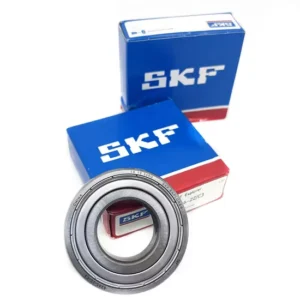
Genuine bearings from brands like SKF, FAG, NSK, and TIMKEN are engineered to work in conjunction with specific lubrication regimes. Their seals are designed to retain grease while excluding contaminants, complementing the function of automatic lubricators. Using counterfeit or low-quality bearings can negate the benefits of a sophisticated lubrication system, as these components may fail prematurely due to material defects or poor manufacturing tolerances.
Sourcing from a supplier who offers full traceability and technical support ensures that both the lubricator and the bearing are compatible and authentic. This holistic approach addresses the root causes of failure rather than treating symptoms. For example, a European wind farm operator reduced unplanned downtime by standardizing on genuine bearings paired with heavy-duty auto-lubers, ensuring that both components met the same high standards for environmental resilience.
When selecting lubricators on conveyor lines, consider the entire lubrication chain, from the grease type to the bearing brand. This integrated strategy minimizes risk and maximizes uptime, providing peace of mind for MRO operators and plant managers.
Conclusion
Reliability stems from matching equipment to environmental reality, not just specifications.
Choosing the right lubricators on conveyor lines demands a focus on dust resistance, vibration tolerance, and maintenance alignment. By prioritizing genuine components and understanding the harsh conditions of industrial applications, operators can prevent costly failures and ensure continuous production.
Have a shutdown list?
Send the whole list in one message. Spare Parts Company quotes each SKF bearing and its accessories line by line, with availability and estimated lead time.