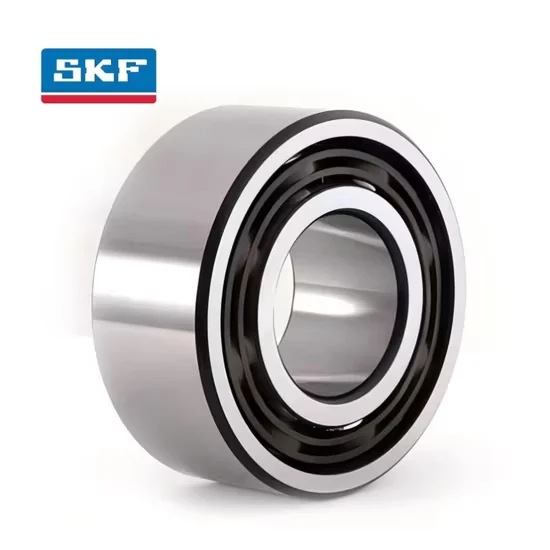
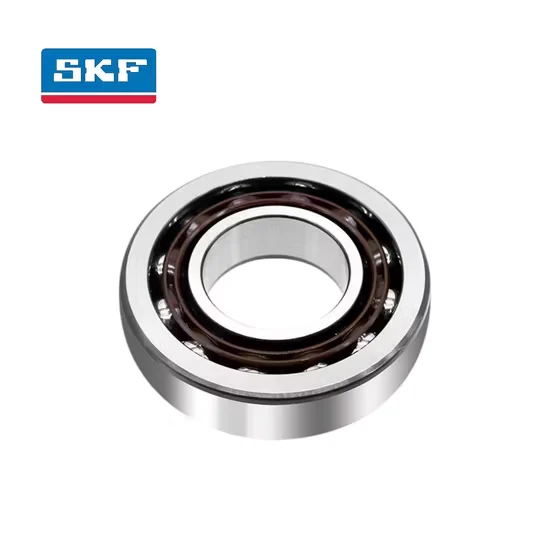
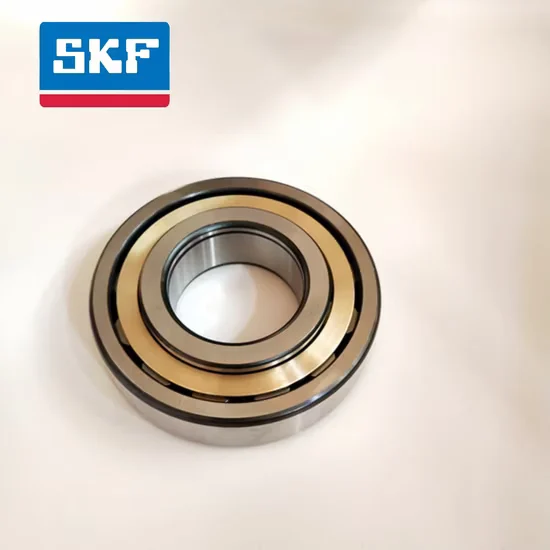
Verified via Manufacturer App — every sealed bearing in this batch undergoes QR authentication through the official verification platform before dispatch, confirming genuine FAG origin and production traceability.
Technical Specifications
| Parameter | Value |
| Designation | FAG 6002-2RS 6202-2RS 6302-2RS 6003-2RS 6203-2RS 6303- |
| Bearing Type | Deep Groove Ball Bearing |
| Material | Chrome Steel |
| Precision Class | P5 |
| Clearance Class | C3 |
| Cage Material | Steel, Nylon, Brass |
| Noise and Vibration Grade | Z1V1, Z2V2, Z3V3 |
| Certification | ISO9001, TS16949, ISO9006, QS9000, VDA6.1 |
| Origin | China, Japan, Sweden |
The 2RS suffix designation should be confirmed against the current manufacturer catalog for exact seal type and material specifications.
Application Suitability
| Industry | Typical Applications |
| Automotive | Transmission shift mechanisms, output shaft support |
| Oil & Gas | Injection pump drives, metering pump shafts |
| Industrial Manufacturing | Electric motor shafts, gearbox intermediate stages |
| Instrumentation | Precision metering devices, sensor rotational assemblies |
| Material Handling | Conveyor drive rollers, reducer input shafts |
Why Oil Pump Temperatures Expose Insufficient Bearing Precision
P5 precision class maintains dimensional stability when sustained heat degrades standard-tolerance bearing performance.
Deep groove ball bearings in injection pumps face continuous thermal loading that amplifies even minor dimensional deviations. Standard P0 grade units lose running accuracy as operating temperatures climb, triggering vibration alarms and unplanned shutdowns. I witnessed this pattern repeatedly on oilfield sites where P0 bearings in injection pumps failed prematurely — vibration levels exceeded thresholds within weeks of commissioning, forcing emergency maintenance. Switching the entire pump fleet to P5 precision FAG 6002-2RS deep groove ball bearing units resolved the chronic downtime. Thermal stability at the raceway level proved to be the decisive factor.

Matching Precision to Pump and Transmission Demands
Chrome steel construction delivers the fatigue strength needed for continuous rotational loading in transmission and pump systems. The C3 clearance class compensates for thermal expansion during sustained operation, preventing internal preload buildup. Multiple cage options — steel, nylon, or brass — allow configuration matching specific speed and vibration requirements across different OEM equipment platforms.
Operating Conditions That Define Bearing Survival
Oil pump and transmission environments impose combined radial and axial loading with frequent pressure pulsations from fluid displacement cycles. Shaft speeds demand consistent running accuracy to prevent resonance at critical frequencies. Temperature swings from cold startup to steady-state operation continuously shift internal clearance values, making initial specification critical. Contact seals retain lubricant while excluding moisture and particulate contamination common in field-deployed equipment. Proper interference fit during installation directly affects internal clearance distribution under load.
Decoding the Specifications That Matter Most
P5 precision ensures tighter bore, outside diameter, and running accuracy tolerances compared to standard P0 class, directly reducing vibration amplitude in high-speed pump and motor applications. C3 internal clearance provides additional thermal compensation space, essential when chrome steel components expand under sustained operating heat. The available cage material range addresses distinct operational priorities: nylon cages minimize friction and noise at moderate temperatures, brass cages withstand higher thermal loads in continuous-duty gearboxes, and pressed steel cages offer reliable performance across general-purpose transmission applications. Noise and vibration grading from Z1V1 through Z3V3 enables selection matching equipment sensitivity requirements, particularly in instrumentation and electrical assemblies where audible output matters.
When Precision Oversights Become Field Failures
Installing bearings without verifying precision class against OEM specifications leads to progressive vibration escalation as thermal cycling accumulates. Premature raceway fatigue develops when internal clearance does not match operating temperature profiles, resulting in unplanned equipment stops during critical production windows. Catastrophic cage failure may follow sustained operation under incorrect preload conditions, potentially damaging adjacent shaft components and housing bores. Equipment warranty coverage often becomes void when maintenance records show installation of under-specified replacement bearings.
Where Procurement Discipline Prevents Field Failures
Every P5 precision unit ships with dimensional inspection documentation confirming tolerance compliance before dispatch. C3 clearance is verified per order to prevent the common substitution error where standard CN clearance units are shipped instead. Massive spot inventory across the full size range in this series enables single-shipment consolidation for mixed-model project requirements. Cross-brand equivalent consultation ensures correct model matching when OEM documentation references alternative manufacturer designations. Long-term technical support covers post-installation failure analysis, helping maintenance teams identify root causes rather than repeating the same specification errors.
Documentation & Authenticity
- Certificate of Conformity listing P5 precision verification for each production lot
- Original manufacturer batch codes enabling full production-line traceability
- Official app QR scan results confirming authenticity of sealed units
- Dimensional inspection report verifying bore, OD, and width tolerances to P5 class
- Material certification confirming chrome steel composition and heat treatment
Storage, Handling & Mounting
- Retain original sealed packaging until installation to protect factory grease fill
- Store away from direct heat sources that may degrade contact seal elastomers
- Handle with clean lint-free gloves to prevent fingerprint corrosion on chrome steel races
- Avoid prying against contact seal lips during mounting to prevent seal damage
- Verify shaft and housing tolerances before pressing to maintain C3 clearance integrity
Provide Your Operating Data for Engineering Review
Share radial and axial load values, operating speed ranges, and expected temperature profiles so our engineering team can verify C3 clearance suitability for your specific thermal expansion conditions. Provide OEM equipment model numbers and original bearing part numbers for cross-reference validation against equivalent designations. Specify housing bore and shaft diameter tolerances to confirm proper fit selection.
Frequently Asked Questions
Q: How do I verify FAG bearing authenticity before installation?
A: Each genuine bearing carries a unique batch code scannable through the manufacturer's official authentication application. The QR verification confirms production origin, date, and specification compliance. We provide scan results with every shipment, and buyers can independently re-verify upon receipt before breaking the seal packaging. This two-layer check eliminates counterfeit risk in critical pump and transmission applications.
Q: What cross-reference factors matter when replacing bearings?
A: Matching bore diameter and outside diameter alone is insufficient. Cross-reference must confirm identical precision class, clearance designation, cage material, and seal type. A dimensional match with different internal clearance or precision grade will perform differently under thermal loading. We verify all four parameters when suggesting equivalent models from other manufacturers in our portfolio.
Q: How does C3 clearance differ from standard CN in oil pump use?
A: C3 clearance provides greater internal space between rolling elements and raceways compared to standard CN. In oil pump and transmission applications where operating temperatures rise significantly, this additional clearance compensates for thermal expansion of chrome steel components. Standard CN clearance in these conditions risks internal preload buildup, increasing friction and accelerating premature failure.
Q: Which seal type suits oil pump environments best?
A: Contact seals provide effective lubricant retention and contamination exclusion for typical oil pump operating conditions. The elastomer seal lip maintains contact with the inner ring, offering reliable protection against moisture and particulate ingress. For environments with heavy external contamination, additional housing-level sealing provides supplementary protection beyond the bearing seal itself.
Q: What relubrication intervals apply to transmission applications?
A: Sealed bearings are factory-filled and designed for maintenance-free operation through their service life — relubrication intervals do not apply. Open-type variants require periodic relubrication based on speed, load, and temperature conditions. Equipment manufacturer maintenance schedules should guide interval selection, adjusted based on observed operating conditions and oil analysis results where applicable.