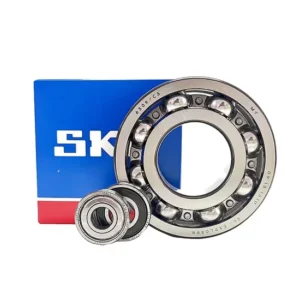
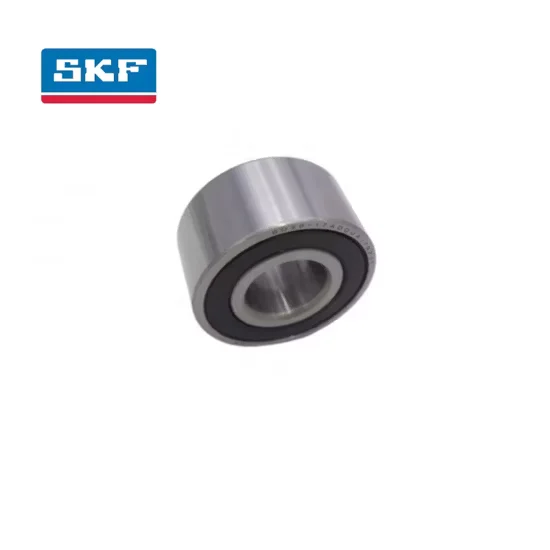
Multi-Brand Consolidation — Consolidate your SKF 6201-2RS1/6202/6203/6204/6205/6206/6207/6208 deep groove ball bearing order with other premium makes in a single shipment without juggling multiple vendors.
Technical Specifications
| Parameter | Value |
| Designation | SKF 6201-2RS1/6202/6203/6204/6205/6206/6207/6208 |
| Bearing Type | Deep Groove Ball Bearing |
| Seal or Shield Type | ZZ, 2RS1, Open |
| Precision Class | P0, P6, P5, P4, P2 |
| Lubrication | Grease or Oil |
| Vibration | Z1V1, Z2V2, Z3V3 |
| Number of Rows | Single |
| Aligning | Non-Aligning |
| Load Direction | Radial |
| Material | Bearing Steel |
| Contact Angle | 0° |
| Separated | Unseparated |
| Origin | Sweden |
Application Suitability
| Industry | Typical Applications |
| Electric Motors | Rotor shaft support and end-shield mounting |
| Pumps | Impeller shaft radial load management |
| Gearboxes | High-speed intermediate shaft stabilization |
| Conveyors | Drive pulley bearing housings |
Preventing Desert Dust Intrusion in Your SKF 6201-2RS1/6202/6203/6204/6205/6206/6207/6208 Deep Groove Ball Bearing
Seal suffix accuracy dictates survival in abrasive environments.
Early in my career dispatching components to Dubai, a simple suffix oversight turned a routine delivery into a catastrophic field failure. I supplied a batch of 6205 bearings but failed to verify the seal designation closely, shipping 2Z shielded units instead of the specified 2RS1 contact-sealed variants. Within months, microscopic desert sand bypassed the non-contact shields, infiltrated the cage, and seized the entire assembly. That harsh lesson cemented my absolute fixation on matching seal suffixes to site conditions.

Aligning Seal Configurations with Contamination Levels
Selecting the correct variant from the SKF 6201-2RS1/6202/6203/6204/6205/6206/6207/6208 deep groove ball bearing range requires evaluating the specific moisture and particulate exposure of the machinery. Our engineering team cross-references your operational environment against manufacturer sealing catalogs to ensure the selected configuration prevents contaminant ingress without generating excessive friction heat.
Managing Radial Loads and Thermal Expansion
Deep groove architectures excel at handling pure radial loads, but high-speed electric motor applications introduce significant thermal gradients. When shaft temperatures rise, the internal clearance shrinks, potentially leading to preload and accelerated fatigue if the initial clearance class was not properly specified. Proper lubrication selection further mitigates these thermal shifts, ensuring the grease maintains its film strength at elevated operating temperatures.
Decoding the 2RS1 Suffix and Precision Tiers
The 2RS1 suffix denotes two contact seals on both sides, providing superior exclusion of fine dust and moisture compared to non-contact ZZ shields, albeit with a slight increase in rotational friction. For high-speed electric motors, balancing this friction against the need for contamination protection is critical to avoid premature grease degradation. Furthermore, selecting between P0 and P2 precision classes directly influences the running accuracy and acoustic noise levels of the equipment. Higher precision tiers minimize geometric deviations, ensuring smoother operation in sensitive gearbox or pump applications where vibration must be strictly controlled.
The Hidden Toll of Mismatched Clearance and Seals
Installing a bearing with inadequate sealing or incorrect internal clearance inevitably triggers unplanned downtime and catastrophic damage to surrounding shaft components. When fine particulates breach a compromised seal, they act as lapping agents that rapidly destroy the raceway finish. Similarly, operating with insufficient clearance under thermal load causes the rolling elements to skid, leading to premature failure and complete warranty voidance.
Securing Authentic Components Through Traceable Channels
Counterfeit bearings often fail dimensional checks and use substandard steel, making rigorous authentication non-negotiable for critical machinery. We supply genuine components with complete batch traceability, ensuring every unit matches the official manufacturer's metallurgical standards. Because the 2RS1 suffix is frequently confused with 2Z in fast-paced procurement, our technical desk manually verifies every seal designation against your specific application requirements before dispatch. This rigorous validation, combined with flexible consolidation shipping, eliminates the risk of receiving mismatched inventory that could halt your maintenance schedule.
Documentation & Authenticity
- Official app QR code verification for every dispatched unit
- Original batch traceability certificates linking to the Swedish production facility
- Dimensional inspection reports confirming P-class tolerances before shipment
- Customs declaration documents proving authentic international transit
- Material test certificates validating bearing steel composition
Storage, Handling & Mounting
- Keep 2RS1 sealed units in original packaging until mounting to preserve factory grease integrity
- Store open and ZZ variants in climate-controlled environments to prevent raceway condensation
- Use induction heaters for tight interference fits on the inner ring to avoid seal lip damage
- Avoid using carbon steel tools on stainless steel variants to prevent cross-contamination and surface rust
- Verify Z1V1 to Z3V3 vibration grades with acoustic sensors post-installation to confirm seating
Engineering Data Required for Technical Validation
To ensure optimal selection from this series, please provide your exact radial and axial load profiles, operational speeds, and ambient temperature ranges. Supplying the OEM equipment number allows our engineers to perform precise cross-reference checks and L10 life recalculations. Detailing the specific contamination level of your facility helps us finalize the most appropriate seal and clearance combination for your machinery.
Frequently Asked Questions
Q: How do I verify the authenticity of these bearings using official tools?
A: You can authenticate the components by scanning the QR code on the packaging using the manufacturer's official mobile application. This digital verification confirms the production batch, origin, and technical specifications, ensuring the product has not been tampered with or counterfeited during transit. We also provide physical traceability documents upon request.
Q: What are the differences between ZZ, 2RS1, and Open seal types?
A: Open bearings require external sealing mechanisms and allow for relubrication. ZZ shields are non-contact metal covers ideal for high-speed, low-contamination environments. The 2RS1 designation indicates two contact rubber seals that provide superior protection against moisture and fine dust, though they generate slightly more friction and are generally not relubricatable.
Q: How do I select the correct precision class for my machinery?
A: Standard P0 class is sufficient for general industrial gearboxes and conveyors. For high-speed electric motors or precision pumps where low vibration and acoustic noise are critical, upgrading to P6, P5, or P4 ensures tighter geometric tolerances. P2 is reserved for ultra-precision applications requiring minimal radial runout and maximum rotational stability.
Q: What is the recommended lubrication approach for the 2RS1 variants?
A: The 2RS1 contact-sealed variants are pre-lubricated for life with high-quality grease at the factory and should not be relubricated in the field. Attempting to force additional grease past the contact seals will damage the sealing lips, leading to immediate contamination ingress. Ensure the factory grease specification matches your operating temperature range.
Q: How can I cross-reference these part numbers with other premium brands?
A: Our technical team can map your required dimensions and performance criteria to equivalent models from other premium global manufacturers if the specific designation is unavailable. By analyzing the load ratings, speed limits, and seal configurations, we identify suitable alternatives that maintain the operational reliability of your equipment without compromising fitment.