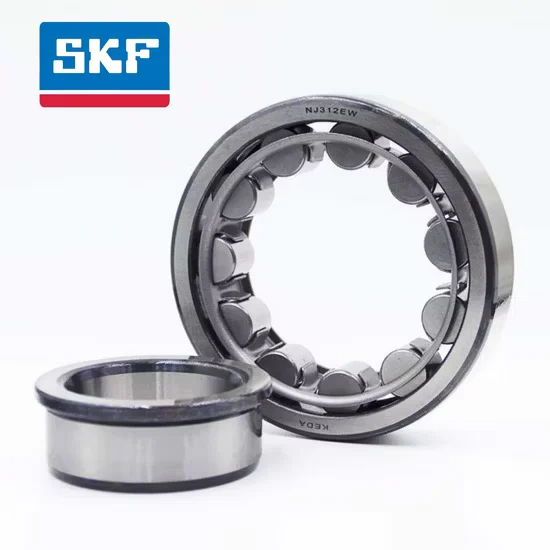
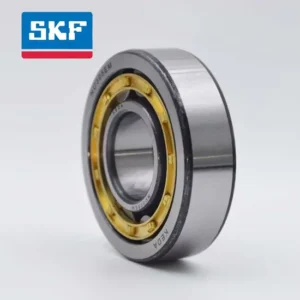
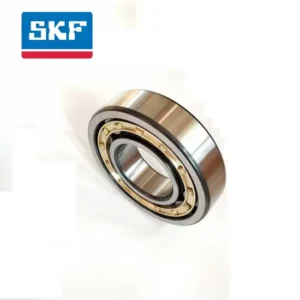
Authenticity via official app — Every SKF N224 Ec M cylindrical roller bearing we dispatch includes verifiable QR codes for instant origin confirmation.
Technical Specifications
| Parameter | Value |
| Designation | SKF N224 Ec M |
| Bearing Type | Cylindrical Roller Bearing |
| Cage Material | Machined Brass |
| Internal Design | Enhanced |
| Clearance Class | C0, C2, C3, C4, C5 |
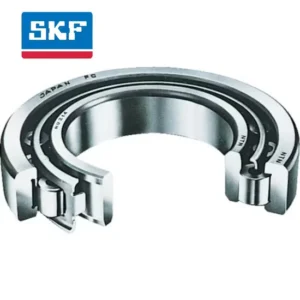
| Separable | Yes |
| Material | Bearing Steel |
| Hardness | 60-64 HRC |
Application Suitability
| Industry | Typical Applications |
| Fluid Handling | High-pressure pump impeller shafts |
| Industrial Gas | Centrifugal compressor rotor supports |
| Power Transmission | Heavy-duty gearbox intermediate shafts |
Why Compressor Rotors Destroy Standard Cages Before the Steel Fails
Vibration and thermal cycling shatter pressed steel cages long before the raceways show fatigue.
I learned this the hard way while working on mining sites in Brazil. A client ordered a basic N224 without checking the suffix, and the pressed steel cage disintegrated inside a high-temperature pump room, halting the compressor entirely and causing massive production losses.. That disastrous experience is exactly why specifying the exact SKF N224 Ec M cylindrical roller bearing with a machined brass cage is non-negotiable for heavy vibration environments. When equipment operates under severe dynamic loads, the structural integrity of the cage becomes the single most critical factor in preventing unplanned downtime and protecting the entire rotating assembly from catastrophic secondary damage.

Matching the Brass Cage to High-Vibration Pumping Stations
When dealing with severe vibration in fluid handling equipment, the SKF N224 Ec M cylindrical roller bearing provides the necessary structural integrity to keep the shaft running smoothly. The machined brass cage maintains precise roller guidance under intense dynamic loads, effectively preventing the skidding, smearing, and microscopic welding that plague lighter cage materials in similar applications. Our global sourcing network ensures these specific heavy-duty variants are readily available for urgent maintenance turnarounds, eliminating the dangerous temptation to substitute inferior cage types just to get the machine running again. By prioritizing the correct cage material, maintenance teams can significantly extend the operational intervals between major overhauls and maintain consistent throughput in critical processing plants.
Navigating Thermal Expansion and Lubrication Starvation
Pump and compressor shafts routinely experience rapid temperature spikes that dramatically alter internal clearance and lubricant viscosity across the rolling elements. If the clearance class is mismatched during the initial selection process, thermal expansion will inevitably crush the rollers against the raceways, causing catastrophic seizure and destroying the shaft. Proper oil flow is absolutely critical to flush out metallic debris from the enhanced internal geometry, while the separable design allows maintenance crews to inspect the inner and outer rings independently without dismantling the entire housing assembly.. Understanding these complex thermodynamic interactions is essential for specifying the right bearing configuration and establishing a reliable relubrication schedule that prevents starvation at peak operating speeds.
Decoding the Enhanced Geometry and Machined Brass Configuration
The 'E' suffix indicates an optimized internal geometry featuring a maximum number of large rollers, which significantly boosts the radial load capacity without increasing the outer envelope dimensions. The 'M' suffix designates a machined brass cage, offering superior durability, structural rigidity, and damping characteristics compared to pressed steel, especially under high-speed or high-vibration conditions. The unverified 'c' suffix requires manufacturer catalog confirmation to ensure exact dimensional compliance and internal profile matching. Available in clearance classes from C0 to C5, this configuration accommodates varying thermal gradients and interference fits typical in heavy-duty compressor assemblies. The bearing steel rings are heat-treated to achieve a standard hardness of 60-64 HRC, ensuring the raceways can withstand immense contact stresses over prolonged operational cycles.
The Cascade Effect of a Mismatched Suffix
Substituting a standard pressed-steel cage for a machined brass one in a high-vibration compressor leads almost immediately to premature cage fracture and subsequent roller skewing inside the raceway. This localized failure rapidly escalates into severe raceway spalling, excessive heat generation, and complete shaft seizure, resulting in massive unplanned downtime and catastrophic damage to adjacent seals, housings, and drive motors. According to established failure analysis frameworks, cage failure is a primary initiator of secondary component destruction that multiplies the initial repair costs exponentially. Procurement teams must recognize that saving a marginal amount on a substituted bearing variant will ultimately trigger financial losses that dwarf the original equipment investment.
Securing the Exact Suffix Configuration for Critical Machinery
We specialize in cross-referencing and securing the exact suffix combinations that local distributors often overlook, misunderstand, or deliberately substitute to close a sale quickly. For the SKF N224 Ec M cylindrical roller bearing, we rigorously verify the machined brass cage specification against the manufacturer's production facilities to prevent dangerous material substitutions that compromise equipment safety. Our massive spot inventory covers thousands of specialized part numbers, allowing us to consolidate mixed-brand orders and dispatch single-unit emergency spares with complete batch traceability. Furthermore, our engineering team provides dedicated technical selection support to validate clearance classes and cage materials against your specific operational parameters, ensuring the delivered product perfectly matches the demanding requirements of your mining or industrial processing site.
Documentation & Authenticity
- Certificate of Conformity validating the exact SKF N224 Ec M designation and brass cage material.
- Original batch traceability linking the specific bearing to the manufacturer's production facilities.
- Official app QR verification codes printed on the packaging for instant authenticity checks.
- Dimensional inspection reports confirming C3 or C4 clearance classes before dispatch.
Storage, Handling & Mounting
- Keep the SKF N224 Ec M cylindrical roller bearing in original packaging to protect the machined brass cage from oxidation.
- Use induction heaters when mounting the inner ring to preserve the selected C3 or C4 clearance class.
- Apply clean gloves when handling the separable inner and outer rings to prevent moisture transfer to the bearing steel raceways.
- Ensure the enhanced 'E' design roller complement is properly aligned with the outer ring raceway during assembly.
Preparing Your Technical Parameters for Verification
To ensure the selected clearance class and cage material perfectly match your specific application, please provide the exact radial and axial loads, operating speeds, and thermal profiles of your pump or compressor system. Sharing the original OEM equipment number allows our engineering team to perform a precise cross-reference and confirm the unverified suffix details against the latest manufacturer documentation. This comprehensive technical review guarantees the bearing will withstand your specific vibration and load conditions, providing you with a fully validated sourcing solution that eliminates guesswork and ensures long-term operational reliability for your most critical rotating assets.
Frequently Asked Questions
Q: What does the 'E' and 'M' suffix mean for this cylindrical roller bearing?
A: The 'E' suffix signifies an enhanced internal design with optimized roller geometry for higher radial load capacity. The 'M' suffix indicates a machined brass cage, providing superior strength and vibration damping compared to pressed steel cages, making it essential for demanding pump and compressor applications.
Q: How to select the correct clearance class for pump applications?
A: Selecting the right clearance class depends on the operating temperature gradient and the interference fit of the shaft and housing. Higher operating temperatures typically require a C3 or C4 clearance to accommodate thermal expansion and prevent internal preload, which could otherwise lead to excessive friction and premature failure.
Q: How to verify the authenticity of the bearing through official channels?
A: Authenticity can be verified by scanning the QR codes on the original packaging using the manufacturer's official authentication app. Additionally, requesting the original batch traceability documentation and Certificate of Conformity ensures the bearing matches the exact SKF N224 Ec M cylindrical roller bearing specifications ordered.
Q: What are the cross-reference considerations when replacing existing bearings?
A: When replacing existing bearings, it is critical to match not only the basic dimensions but also the exact suffix configuration, particularly the cage material. Substituting a machined brass cage with a pressed steel variant in high-vibration environments will drastically reduce service life and risk catastrophic equipment failure.