Unified Sourcing Hub — Procure mixed-brand industrial packages alongside this specific SKF lineup without coordinating multiple vendors, ensuring consolidated global shipping and unified quality documentation.
Technical Specifications
| Parameter | Value |
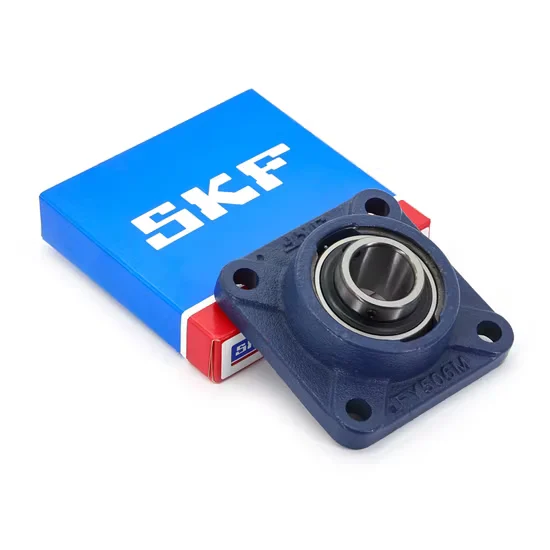
| Designation | FY15TF/FY17TF/FY20TF/FY25TF/FY30TF/FY35TF FY506M |
| Product Type | Insert Bearing / Pillow Block Unit |
| Bearing Type | Deep Groove Ball Bearing |
| Material | Bearing Steel |
| Rows Number | Single |
| Lubrication | Grease or Oil |
| Precision Rating | P0 P6 P5 P4 |
| Vibration | Z1V1 Z2V2 Z3V3 |
| Separated | Separated |
| Bearing Block Model | P |
| Origin | Sweden |
| Cage Material | Machined brass cage (M suffix) |
Note: FY, TF, and 506 suffixes remain unverified and require manufacturer catalog confirmation.
Application Suitability
| Industry | Typical Applications |
| Material Handling | Conveyor system drive pulleys, idler rollers, and transfer belt tensioners |
| Agriculture | Harvester threshing cylinders, auger bearings, and grain elevator drives |
| Textile | Spinning frame drafting rollers, yarn guides, and loom beat-up mechanisms |
| Fluid Management | Centrifugal pump shaft supports, agitator drives, and cooling tower fans |
Why Dust Ingress Destroys SKF FY15TF/FY17TF/FY20TF/FY25TF/FY30TF/FY35TF insert bearing Units Before Fatigue
Contaminant exclusion dictates service life far more than dynamic load capacity in harsh environments.
During my early failure analysis years in Thailand, I dismantled seized pillow block units at a palm oil mill. The crew had swapped original triple-lip seals for standard shields, allowing particulate matter to infiltrate the raceway. When sourcing a genuine SKF FY15TF/FY17TF/FY20TF/FY25TF/FY30TF/FY35TF insert bearing, ignoring sealing configurations leads to catastrophic downtime. Fine dust acts as a lapping compound, degrading the raceway and causing premature spalling before theoretical fatigue limits.

Aligning the Housing with High-Vibration Conveyors
Conveyor systems subject mounted units to continuous radial shocks and structural misalignment. The deep groove raceway geometry inherent in this SKF FY15TF/FY17TF/FY20TF/FY25TF/FY30TF/FY35TF insert bearing accommodates moderate radial loads while the cast iron housing absorbs vibrations. The spherical outer surface allows for static self-alignment, compensating for mounting errors and preventing destructive edge loading. Our global supply chain ensures these exact configurations reach your facility without unauthorized substitutions.
Navigating Particulate Exposure and Lubrication Washout
Agricultural machinery operates in environments saturated with organic dust and fiber debris. Standard non-contact shields fail to prevent microscopic ingress, which abrasively wears the raceway. Furthermore, frequent high-pressure washdowns can emulsify standard greases and wash away critical lubricant films. Selecting the correct seal type and establishing a rigorous relubrication interval is critical to prevent lubricant starvation, minimize friction heat, and avoid thermal seizure.
Decoding the Machined Brass Cage Advantage
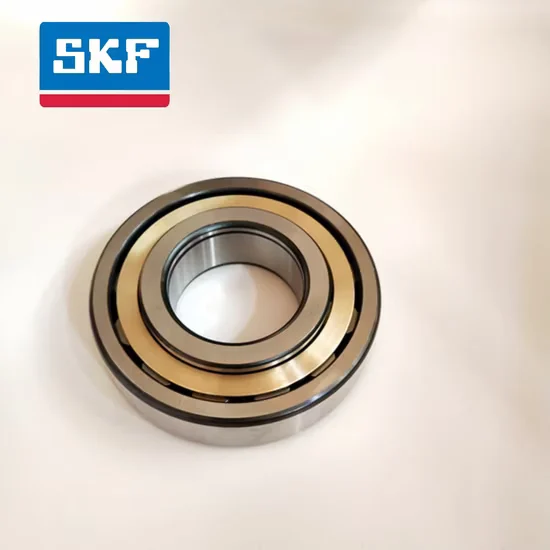
The M suffix indicates a machined brass cage, a crucial engineering upgrade over pressed steel for high-vibration applications. Brass cages exhibit superior resistance to vibration-induced fatigue and maintain structural integrity when lubrication films thin out under heavy shock loads. This material choice prevents cage collapse, ensuring the rolling elements remain evenly spaced. Consequently, this minimizes friction heat generation and prevents skidding during continuous operation or transient overloads.
The Financial Drain of Premature Housing Replacement
Specifying an incorrect clearance class or ignoring housing dimensions results in micro-movements between the shaft and inner ring. This fretting corrosion accelerates wear, generates abrasive debris, and necessitates replacing the entire pillow block assembly. Such unplanned downtime disrupts production schedules and damages adjacent drive components. The compounded financial impact of halted lines far exceeds the initial savings of choosing an improper substitute.
Securing Traceability in a Market Flooded with Counterfeits
The insert market is heavily targeted by counterfeiters who replicate packaging but use substandard cage materials. We source directly from authorized channels, providing complete batch traceability for every unit shipped. Our engineering team cross-references your OEM equipment numbers to verify the exact housing footprint and sealing requirements. Furthermore, we offer flexible mixed-brand consolidation, allowing you to combine this specific SKF lineup with other maintenance requirements, significantly reducing procurement overhead.
Documentation & Authenticity
- Certificate of Conformity validating the Swedish origin and specific manufacturing batch.
- Official app QR verification for instant authenticity checks on the outer packaging.
- Material inspection reports confirming the bearing steel composition and core hardness.
- Dimensional inspection data verifying the precision class tolerance before dispatch.
Storage, Handling & Mounting
- Retain the original vapor-phase inhibitor packaging until installation to protect the bearing steel from humidity.
- Store the pillow block units horizontally in a temperature-controlled environment to prevent housing distortion.
- Use induction heaters for cylindrical bore installations, avoiding direct flame exposure that degrades grease.
- Verify the set screw torque specifications to prevent inner ring deformation and shaft scoring.
- Ensure the machined brass cage is not struck directly with steel hammers during assembly.
Engineering Review and Selection Support
To ensure optimal performance, please provide your operational parameters including radial and axial loads, rotational speed, and ambient temperature ranges. Sharing the OEM equipment model number allows our technical team to perform a precise cross-reference check and verify housing mounting dimensions. We will then recommend the appropriate clearance class and sealing configuration tailored to your specific application environment.
Frequently Asked Questions
Q: How can I verify the authenticity of the SKF FY15TF/FY17TF/FY20TF/FY25TF/FY30TF/FY35TF insert bearing upon delivery?
A: Every genuine unit features a unique QR code on the packaging linking to the manufacturer's official verification app. Scanning confirms the production batch and origin. We also provide a Certificate of Conformity and original factory traceability documents with every shipment to guarantee provenance and protect your operations from counterfeit risks.
Q: What is the functional difference between the machined brass cage and standard pressed steel cages?
A: The machined brass cage, denoted by the M suffix, offers significantly higher structural rigidity and vibration resistance. It maintains precise rolling element spacing under heavy loads and elevated temperatures, preventing cage collapse and reducing friction heat, which is essential for demanding industrial applications with frequent shock loads.
Q: How do I determine the correct relubrication interval for these pillow block units?
A: Relubrication frequency depends on operational speed, load magnitude, temperature, and environmental contamination levels. While pre-lubricated, harsh environments require periodic replenishment. We recommend consulting the manufacturer's charts or providing your specific operating conditions so our engineering team can calculate the optimal maintenance schedule to prevent lubricant starvation.
Q: Can these insert bearings accommodate initial shaft misalignment during installation?
A: Yes, the spherical outer diameter of* in the pillow block housing, allowing for static self-alignment. This compensates for initial mounting errors and minor shaft deflections under load, reducing edge loading on the raceway and significantly extending the service life of the assembly.
Q: What information is needed to cross-reference an obsolete part number for replacement?
A: Please provide the original part number, the OEM equipment model, and the physical dimensions of the existing housing and shaft. Our technical team will cross-reference these details against current catalogs to identify the exact modern equivalent, ensuring the replacement matches the original load capacity and mounting footprint perfectly.