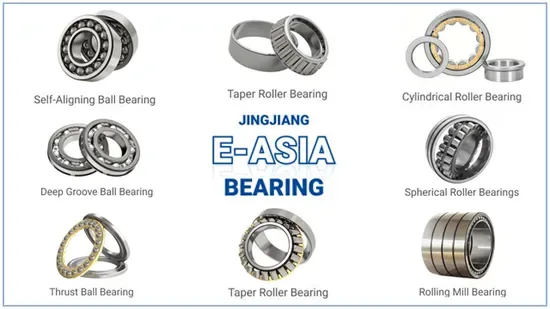
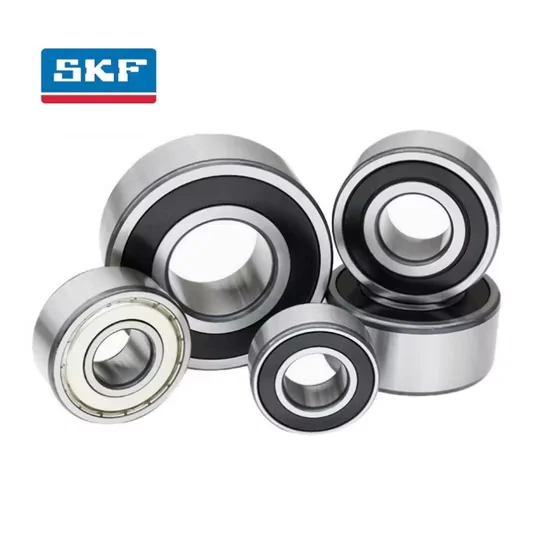
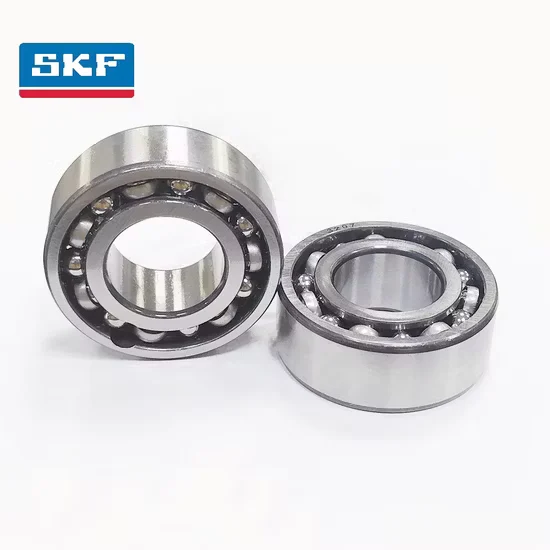
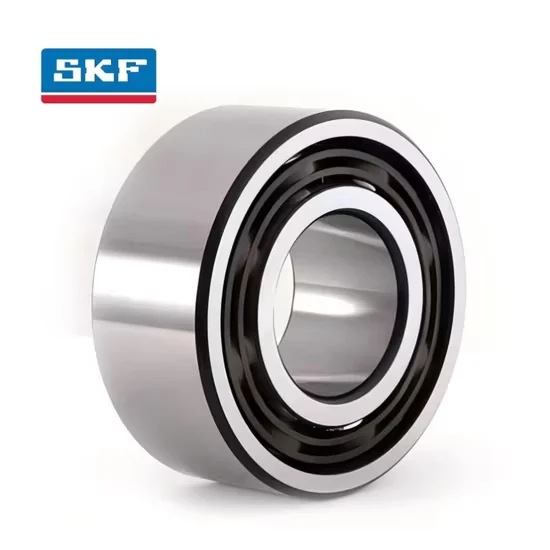
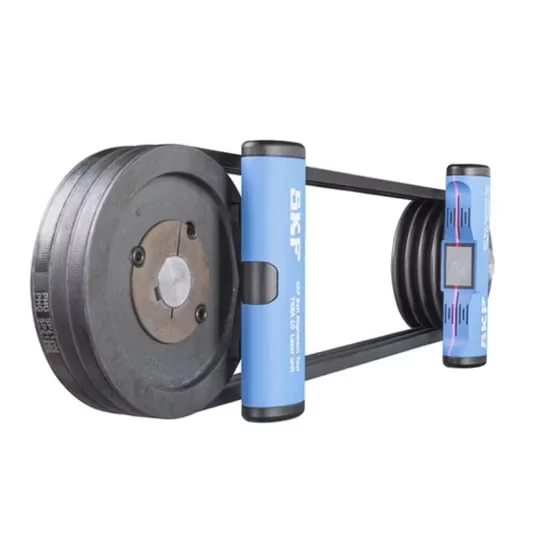
Cross-Reference Alignment — verifying clearance, cage, and precision suffixes prevents mismatched equivalents in tensioner assemblies.
Technical Specifications
| Parameter | Value |
| Designation | FAG 6002-2RS 6202-2RS 6302-2RS 6003-2RS 6203-2RS 6303- |
| Bearing Type | Deep Groove Ball Bearing |
| Material | Chrome Steel |
| Precision Class | P5 |
| Clearance Class | C3 |
| Cage Material | Steel, Nylon, Brass |
| Noise/Vibration Level | Z1V1, Z2V2, Z3V3 |
| Certification | ISO9001, TS16949, ISO9006, QS9000, VDA6.1 |
| Origin | China, Japan, Sweden |
Note: The 2RS suffix requires manufacturer catalog confirmation for exact seal material and friction characteristics.
Application Suitability
| Industry | Typical Applications |
| Air Compressor Systems | Tensioner pulleys, rotor drive assemblies |
| Automotive Transmissions | Clutch release mechanisms, gear shift linkages |
| Electrical Instrumentation | High-speed motor shafts, precision cooling fans |
Why Suffix Mix-ups Destroy Rotors When Using the FAG 6002-2RS deep groove ball bearing
Matching the exact precision and clearance suffixes prevents catastrophic rotor sweeping in high-speed tensioner applications.
During my early field service days in Nigeria, a documentation oversight swapped a standard grade for a high-precision unit in a critical tensioner assembly. The resulting high-speed vibration caused the rotor to sweep the stator, leading to catastrophic unplanned downtime. Such qualitative errors in precision selection completely compromise the operational integrity of the entire compression system. When sourcing mixed-brand packages for urgent maintenance, overlooking these subtle suffix differences often transforms a minor replacement task into a major mechanical overhaul, emphasizing the need for rigorous technical verification before installation.

Aligning the FAG 6002-2RS deep groove ball bearing with Tensioner Dynamics
Selecting the correct FAG 6002-2RS deep groove ball bearing for tensioner pulleys demands strict alignment between internal clearance and operational thermal expansion. Our engineering team provides cross-brand equivalent model consultation to ensure the selected cage material and precision class perfectly match your specific air compressor load profiles. This prevents premature wear and maintains optimal belt tracking under continuous radial stress. By analyzing the exact rotational dynamics and environmental factors of your machinery, we can pinpoint the ideal configuration that maximizes service life and minimizes unexpected maintenance interventions across your production facility.
Managing High-Speed Vibration and Thermal Shifts in Compressors
Tensioner applications subject bearings to continuous radial loads combined with high rotational speeds, generating significant internal heat within the assembly. Elevated temperatures dictate the need for greater internal clearance to accommodate thermal expansion of the bearing steel components without inducing excessive preload. Furthermore, effective sealing is critical to prevent airborne particulate ingress from the compressor environment, which can severely degrade lubrication and accelerate wear. Balancing contact friction from the seals against the required rotational speed ensures stable performance without excessive heat buildup, ultimately protecting the surrounding transmission components from thermal damage.
Decoding Precision, Clearance, and Cage Selection
The P5 precision class guarantees tighter dimensional and running accuracy compared to standard normal grades, which is essential for minimizing vibration in high-speed electrical and compressor applications. A C3 clearance class provides the necessary internal gap to handle thermal expansion during continuous operation, preventing internal preload from seizing the rolling elements under heavy loads. Depending on the specific thermal and speed requirements, the cage is available in steel, nylon, or brass variants to optimize weight, friction characteristics, and overall structural rigidity. Additionally, the Z1V1 to Z3V3 noise and vibration levels ensure smooth, quiet operation, which is particularly critical for instrumentation and sensitive automotive transmission systems where acoustic performance is strictly monitored.
The Cascading Impact of Incorrect Clearance and Precision
Installing a bearing with incorrect internal clearance or insufficient precision often leads to premature failure and catastrophic damage to surrounding machinery components. When a tensioner bearing fails unexpectedly, it triggers unplanned downtime and voids equipment warranties, creating massive financial ripple effects across the entire production line. According to established failure analysis frameworks, a significant share of these breakdowns stems from misapplied specifications rather than inherent manufacturing defects. Ensuring exact alignment of all technical parameters mitigates these hidden operational risks, safeguarding your equipment from the cascading consequences of improper component selection and extending the overall reliability of the system.
Securing Traceability and Technical Accuracy for Your Sourcing
We guarantee authentic bearings with complete traceability documentation, eliminating the risk of counterfeit parts entering your critical air compressor assemblies. Our massive spot inventory covers thousands of standard part numbers, allowing us to fulfill urgent MRO replacements without typical multi-week lead times. When cross-referencing equivalent models, our technical team strictly verifies that the clearance, cage material, and precision class align perfectly with your original equipment requirements. We also provide flexible consolidation shipments, ensuring that mixed-brand project orders arrive safely and cost-effectively at your facility. This comprehensive approach ensures that every component integrates flawlessly into your maintenance schedule, backed by long-term technical support for failure analysis.
Documentation & Authenticity
- Certificate of Conformity verifying the P5 precision grade and C3 clearance specifications for each batch.
- Original factory batch traceability records linking the specific part numbers to their production facilities.
- Official brand app QR validation to confirm the authenticity of the supplied tensioner bearings.
- Material and dimensional inspection reports confirming bearing steel composition and exact tolerance limits.
- Origin documentation detailing the manufacturing country for compliance with local import regulations.
Storage, Handling & Mounting
- Keep original packaging sealed until mounting to protect C3 clearance bearings from ambient humidity and corrosion.
- Use clean gloves when handling P5 precision components to prevent skin oils from degrading the surface finish.
- Store nylon cage variants away from direct ultraviolet light to prevent polymer degradation before installation.
- Avoid excessive heating during induction mounting to protect the internal grease of the 2RS sealed units.
- Keep Z3V3 vibration grade components in a dust-free environment to maintain their low-noise operational characteristics.
Preparing Your Technical Parameters for Selection Review
To ensure optimal performance, please share your specific radial and axial loads, operational speeds, and ambient temperature ranges for our L10 life calculation. Providing the original equipment manufacturer part numbers allows our engineering team to perform precise cross-reference verification. This technical review guarantees that the selected precision and clearance parameters perfectly match your air compressor tensioner requirements. Supplying detailed operational context enables us to recommend the most appropriate seal and cage configuration, ensuring long-term reliability and preventing premature degradation in your specific working environment.
Frequently Asked Questions
Q: How can I verify the authenticity of these bearings using official traceability tools?
A: You can validate authenticity by scanning the QR codes via the official manufacturer application, which confirms the production batch and origin. We also supply a Certificate of Conformity and original factory traceability documents. This dual-verification process ensures that every tensioner bearing meets the strict P5 precision and C3 clearance requirements without any risk of counterfeit infiltration.
Q: What are the cross-reference considerations for matching clearance, cage, and precision?
A: When cross-referencing equivalent models, it is critical to align the internal clearance, cage material, and precision class simultaneously. A mismatch in any of these parameters, such as substituting a standard cage for a high-speed brass variant, can lead to premature failure. Our technical team verifies these three core specifications to ensure the replacement perfectly matches your original equipment design.
Q: How do P5 precision and C3 clearance benefit air compressor applications?
A: The P5 precision class minimizes dimensional deviations and running inaccuracies, which significantly reduces high-speed vibration in tensioner pulleys. Meanwhile, the C3 clearance provides greater internal space to accommodate thermal expansion generated during continuous compressor operation. Together, these specifications prevent internal seizing and ensure stable, quiet performance under demanding thermal and rotational conditions.
Q: Which cage material is best for my specific operating temperature?
A: Steel cages offer excellent mechanical strength for standard temperature ranges, while nylon cages provide lower friction and reduced noise for high-speed applications. Brass cages are typically selected for environments with higher thermal loads or where chemical resistance is required. We recommend evaluating your specific operational temperature and speed profiles to determine the most suitable cage variant for your assembly.
Q: What are the recommended lubrication practices for sealed bearings?
A: Bearings equipped with contact seals are pre-lubricated at the factory and designed to be maintenance-free for their operational lifespan. Attempting to relubricate these sealed units can damage the sealing lips and introduce contaminants. For applications requiring periodic relubrication, we recommend switching to open or shielded variants that allow external grease replenishment without compromising the internal components.