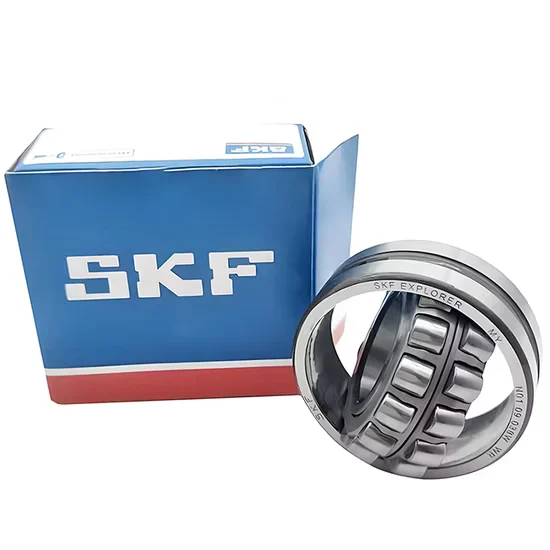
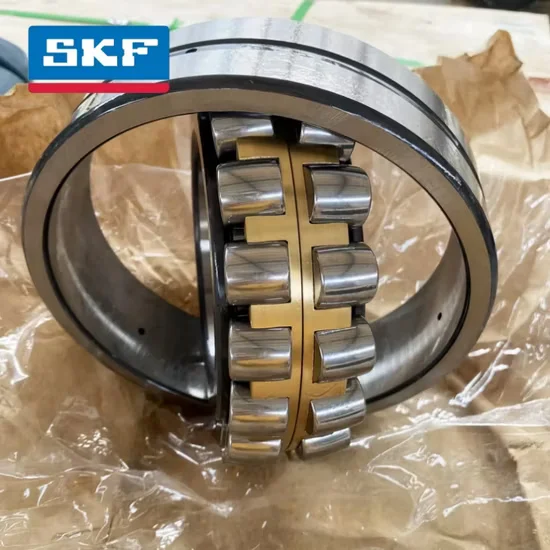
Cross-Reference Alignment Verified — Dimensional and load equivalents for 22280CA and 22308CCK cross-checked against OEM machinery manuals.
Technical Specifications
| Parameter | Value |
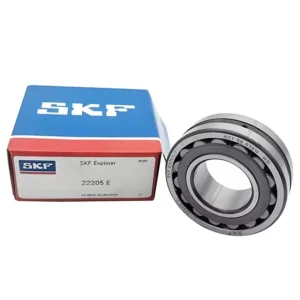
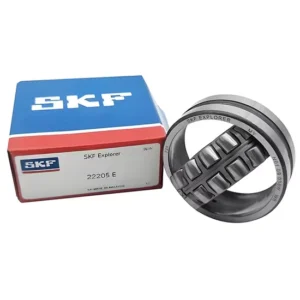
| Designation | SKF 22276CA |
| Bearing Type | Spherical Roller Bearing |
| Bore Diameter (d) | 380 mm |
| Outside Diameter (D) | 680 mm |
| Width (B) | 175 mm |
| Number of Rows | Double |
| Material | Bearing Steel |
| Load Direction | Radial Bearing |
| Separated | Unseparated |
| Lubrication | Grease or Oil |
| Origin | Sweden |
Note: The CA suffix requires manufacturer catalog confirmation for exact cage and internal design specifics.
Application Suitability
| Industry | Typical Applications |
| Mining and Construction | Vibrating screens and primary crushers |
| Metallurgy | Steel mill continuous casting equipment |
| Pulp and Paper | Paper machine dryer cylinders |
Why Vibrating Screens Destroy Standard Spherical Roller Bearings
High-frequency oscillation rapidly fatigues inadequate cage materials under continuous shock loading.
In my early failure analysis days, I witnessed the catastrophic aftermath of installing pressed steel cages in high-vibration environments. The constant shockloads cause cage pockets to fracture, leading to roller skewing and sudden seizure within weeks. Selecting the correct SKF 22276CA spherical roller bearing with the proper internal geometry and machined cage prevents these costly unplanned shutdowns. Mining and aggregate processing equipment operates under brutal conditions where standard components simply cannot survive the relentless mechanical stress. Understanding the specific failure modes outlined in industry standards is the first step toward extending maintenance intervals.

Matching Internal Geometry to Severe Oscillation
Heavy machinery demands components that tolerate continuous misalignment and extreme shock loading without structural degradation. The SKF 22276CA spherical roller bearing accommodates significant shaft deflections while maintaining optimal load distribution across its double-row arrangement. This self-aligning capability is crucial for vibrating screens where the shaft experiences constant bending moments. Our sourcing network ensures that the exact internal clearance and cage design match the specific oscillation frequency of your vibrating equipment. By prioritizing structural durability over standard catalog selections, we help procurement engineers avoid the hidden pitfalls of generic replacements that lack the necessary metallurgical resilience for heavy-duty applications.
Managing Contamination and Thermal Expansion in Crushing Circuits
Crusher environments introduce severe particulate contamination and fluctuating operational temperatures that challenge standard lubrication strategies. Adequate sealing or external shielding is critical to prevent abrasive mineral dust from degrading the lubricant film and scoring the raceways. Furthermore, thermal expansion during continuous operation necessitates appropriate radial internal clearance to prevent excessive preload, which otherwise accelerates fatigue and generates destructive heat. Proper lubrication intervals with high-viscosity grease further protect the contact zones under heavy radial loads. When ambient conditions involve extreme temperature variations, the interplay between thermal growth and mechanical loading must be carefully calculated to maintain optimal operational geometry.
Decoding the CA Suffix and Dimensional Parameters
The 380 mm bore, 680 mm outside diameter, and 175 mm width define the physical envelope of this large-bore component, designed for massive radial capacity. The CA designation historically indicates a specific internal design, typically associated with a machined brass cage and an inner ring without integral flanges, which significantly improves roller guidance and reduces friction at higher speeds. Understanding this suffix is absolutely vital, as substituting a pressed steel alternative in high-vibration applications drastically reduces service life and invites premature cage fracture. The double-row configuration inherently handles heavy radial forces while permitting angular misalignment, making it indispensable for unevenly loaded shafts. Procurement teams must rigorously verify these suffix details to ensure the delivered component matches the exact engineering requirements of the host machinery.
The Financial Impact of Premature Cage Failure
Specifying an incorrect cage type or internal clearance for heavy-duty applications results in catastrophic damage to the shaft, housing, and surrounding drive components. According to established diagnostic frameworks, cage fracture is a primary failure mode in vibrating machinery, rapidly escalating from minor vibration anomalies to complete mechanical seizure. The resulting unplanned downtime, emergency air-freight logistics, and secondary machining repairs far exceed the initial component cost. Reliability engineers recognize that preventing these cascading failures requires strict adherence to manufacturer suffix specifications and rigorous incoming quality inspections. Compromising on internal design details to save marginal upfront costs inevitably triggers massive financial penalties during peak production seasons.
Securing Authentic Heavy-Duty Components
Sourcing large-bore bearings requires rigorous verification protocols to avoid counterfeit or mislabeled products that threaten operational safety. We provide complete batch traceability for every SKF 22276CA spherical roller bearing, ensuring the metallurgical properties and heat treatment strictly meet original specifications. Our technical team cross-references OEM part numbers to verify suffix accuracy, preventing the disastrous mismatch of cage materials that plagues unauthorized supply chains. We consolidate shipments globally, offering flexible quantities from single emergency replacements to full project allocations without sacrificing documentation integrity. This rigorous approach to supply chain transparency guarantees that the critical rotating elements in your plant are exactly what the engineering drawings demand.
Documentation & Authenticity
- Certificate of Conformity validating the Swedish origin and manufacturing batch.
- Original batch traceability documentation linking the specific bearing to factory test records.
- Dimensional inspection report confirming the 380 mm bore and 680 mm outside diameter tolerances.
- Official app QR verification enabling instant authenticity checks upon delivery.
Storage, Handling & Mounting
- Store the 380 mm bore bearing in its original moisture-barrier packaging until immediately before induction heating.
- Use dedicated lifting equipment for the heavy double-row assembly to prevent cage deformation during transit.
- Measure residual internal clearance after mounting to ensure the interference fit has not eliminated operational play.
- Apply the recommended high-viscosity grease immediately after installation to protect the open raceways from ambient dust.
Engineering Review for Optimal Selection
To ensure precise application matching, please provide the operational radial and axial loads, rotational speed, and ambient temperature profiles for your specific machinery. Sharing the specific OEM equipment model number allows our engineering team to verify cross-reference equivalents and confirm the required internal clearance class. This technical review guarantees the selected component withstands your specific vibration and misalignment parameters without inducing premature fatigue. Additionally, detailing the housing fit tolerances and shaft deflection limits enables us to recommend the optimal mounting procedures and lubrication regimes adapted to your unique operational environment.
Frequently Asked Questions
Q: How do I verify the authenticity of this large-bore bearing?
A: You can verify the authenticity by scanning the QR code on the packaging using the official manufacturer application. Additionally, we provide original batch traceability documentation and a Certificate of Conformity. This ensures the metallurgical composition and dimensional tolerances strictly align with factory standards, protecting your heavy machinery from counterfeit risks.
Q: What cross-reference considerations apply when replacing this model?
A: When replacing this model, you must verify the dimensional envelope and the specific internal design suffix. Cross-referencing requires matching not only the 380 mm bore and 680 mm outside diameter but also the cage material and internal clearance. Our technical team validates these parameters against equivalent models to ensure smooth integration into your existing housing.
Q: How does internal clearance affect vibrating screen performance?
A: Internal clearance compensates for thermal expansion and shaft deflection during high-frequency oscillation. If the clearance is too tight, thermal growth induces excessive preload, accelerating fatigue. Conversely, excessive clearance increases vibration and noise. Selecting the appropriate clearance class ensures the rollers maintain optimal load distribution under the severe shockloads typical of crushing and screening circuits.
Q: What are the recommended mounting procedures for large-bore bearings?
A: Large-bore bearings require precise induction heating to expand the inner ring for a proper interference fit. It is crucial to monitor the heating temperature to prevent altering the steel microstructure. After mounting, always measure the residual internal clearance to confirm the fit has not eliminated the necessary operational play required for heavy radial load accommodation.